
'The DNA of Tata Consumer Products is all food and beverage.'

Godrej Consumer Products (GCPL) had a disappointing third quarter (Q3FY25) with flat volumes (after 7 per cent growth H1FY25). Price hikes will be required to maintain margins to offset the cost of palm oil inflation. However, some analysts see Q3 as an exception with strong volume growth expected to resume and it may be the fastest growing FMCG player in FY26.

It is a marketplace of attention, where legacy publishers, global franchises, and consumer brands meet to make the most of India's expanding fandom economy.

Fast-moving consumer goods (FMCG) companies are expected to witness pressure on volumes in the October-December quarter. However, price hikes will help push up revenues, said brokerages.For India's largest engineering firm, Larsen and Toubro (L&T), the analysts expect a 20 per cent growth in consolidated revenue, and an 8.1 per cent core business Ebitda margin, up 40 bps from a year ago.

A growing preference for convenience products and hybrid media consumption, and a surge in digital engagement have led to a rise in the average basket size for fast-moving consumer goods (FMCG) among rural consumers. The average of the rural FMCG basket saw a 60 per cent rise from 5.8 in 2022 to 9.3 in 2024 as it expanded to include convenience products like ready-to-eat packages and beverages, stated the fifth edition of the Rural Barometer Report, brought out jointly by GroupM and Kantar, which surveyed 4,376 rural adults across 20 states.

Reliance Industries (RIL) annual general meeting (AGM) had several stunning announcements. RIL looks to list Jio Platforms (JPL) by June 2026. It targets doubling of FY22 earnings before interest, taxes, depreciation and amortisation (Ebitda) (Rs 1.25 trillion; $14.6 billion) by FY27 implying 14.7 per cent compound annual growth rate (CAGR) over the FY22 levels.

'In the long run, India's strong growth story and reforms to make assets globally attractive will determine the rupee's resilience.'

'This is the Bengal story, where businesses are nurtured, dreams are realised, and legacies are built.'

'Because of the size and complexity of the economy, we can address almost every job that is there, from agriculture farming to healthcare.'

Fast-moving consumer goods (FMCG) companies, retail firms, and producers of consumer durables are witnessing stable urban demand. However, people in the trade are waiting for clearer signs of revival closer to the festival season, starting in September.

Festive buying spree unleashed by lower tax rates pushed gross GST collection to about Rs 1.96 lakh crore in October, registering a 4.6 per cent year-on-year growth -- the slowest rate so far this fiscal.

'I do believe there will be a resolution in the next couple of months on the penal tariff and hopefully on the reciprocal tariff also.'
There remains a debate on who said this: "When the facts change, I change my mind. What do you do, Sir?" Was it the British economist John Maynard Keynes or the American economist Paul Samuelson. Irrespective of who said it, this sentiment appears to have found resonance in ITC's boardroom in recent years.
Most of the changes have come about in the last four years and ITC is now reaping the dividends - standalone revenues from the non-cigarettes FMCG business have grown 40 per cent from FY17 to Rs 14,728.21 crore in FY21 and pre-tax profits 30 times to Rs 823.69 crore. The business accounted for 30.58 per cent of gross revenues and 4.85 per cent of pre-tax profits in FY21. "In the last four years, our margins in FMCG have gone up by 640 basis points (bps) and EBITDA margins have been moving up consistently. "We created levers that enabled a sustained growth trajectory," said ITC chairman and managing director Sanjiv Puri. Puri took charge as the chief executive officer in 2017; in 2018, he was redesignated managing director and effective May 2019, he became chairman.

Priya Nair will become the first woman CEO and MD of Hindustan Unilever Ltd (HUL) effective August 1, 2025, with India's largest FMCG firm announcing her appointment on Thursday. Nair, currently president, Beauty & Wellbeing, Unilever, has been appointed for a period of five years.

Procter & Gamble has announced Shailesh Jejurikar as its next CEO, effective January 1, 2026. Jejurikar, an India-born executive, will succeed Jon Moeller in the role.

'Indian markets may underperform global peers for the next two quarters.' 'But beyond that, India should catch up and resume its long-term growth path.'

At the annual general meeting of Reliance Industries earlier this week, Isha Ambani, director at Reliance Retail Ventures, announced that the company is foraying into the fast-moving consumer goods (FMCG) space. But analysts say that only time will tell if this will lead to a disruption in India's FMCG market. While Reliance Retail's initial strategy is to take its own brands, which it currently sells at its own supermarkets and hypermarkets, to general trade, it is also looking at acquisitions.
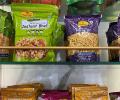
Temasek is nearing a deal to acquire a 10% per cent stake in Haldiram Snacks Foods, valued at $10 billion.

'Stop fearing 'No' and build your empire. 'By embracing rejection, you gain clarity, data and a stronger team, paving the way for inevitable growth,' Mamaearth Co-Founder Ghazal Alagh tells aspiring entrepreneurs.

A young couple sharing a laugh - in the living room over a Polish joke book, on the beach, in the rain - with the tagline, "Made for each other", hung from billboards at prominent street corners from the 1960s to the 1990s. It was a campaign for one of the largest selling cigarette brands in India, Wills (Navy Cut) from the ITC stable, that resonated with a generation of smokers and non-smokers alike till the curtains came down on tobacco advertising in 2004. As we prepare to welcome 2024, ITC has metamorphosed from a tobacco giant into a conglomerate straddling multiple large-sized businesses. In the mind space of Gen Z or millennials, the company represents a gamut of branded products - from frozen food (ITC Master Chef), noodles (YiPPee!), and cookies (Sunfeast) to snacks (Bingo!) and notebooks (Classmate), and so on and so forth.

India's fast-moving consumer goods (FMCG) sector witnessed growth in rural consumption in volume terms outpace urban consumption for the first time in five quarters, in the January-March period. According to a report from consumer intelligence firm NIQ, rural consumption grew at a rate of 7.6 per cent year-on-year (Y-o-Y) in Q1CY24, overtaking that in urban areas which stood at 5.7 per cent.

From the 30-share pack, Hindustan Unilever, Tata Motors, Axis Bank, Nestle India, Asian Paints, ITC, Reliance Industries, Mahindra & Mahindra, IndusInd Bank and State Bank of India were among the laggards. Larsen & Toubro, Tata Steel, JSW Steel, HDFC Bank, Adani Ports, Kotak Mahindra Bank, Bharti Airtel and PowerGrid were among the gainers.

FMCG major Hindustan Unilever Ltd (HUL) on Thursday reported a 5.97 per cent rise in its consolidated net profit to Rs 2,768 crore for the June quarter of FY26, helped by gains from a re-estimation of taxes paid in the previous year. The company had logged a net profit of Rs 2,612 crore in the April-June quarter a year ago, according to a regulatory filing from HUL, the maker of popular brands as Dove, Lifebuoy, Lux, Lakm, and Sunsilk.
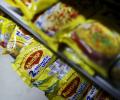
The turnover of FMCG major Nestle India's has grown 2.5 folds to Rs 20,100 crore in last one decade, post the Maggi crisis in 2015, according to the company's latest annual report. At the time of crisis, Nestle India's turnover was at Rs 8,100 crore.
Lower rates effectively increase disposable income, strengthen purchasing capacity, and support broader consumption growth.

Recalling or relabelling medicines already in the supply chain before September 22 will not be mandatory, the finance ministry said on Tuesday, issuing a fresh set of frequently asked questions (FAQs) to address industry concerns following the announcement of goods and services tax (GST) revisions.

Big, listed FMCG (fast-moving consumer goods) companies such as Hindustan Unilever, ITC, Nestl, and Britannia have been top-performing stocks on the bourses in recent weeks. The Nifty FMCG index, which tracks the share prices of the country's top 15 listed FMCG companies, is up 1.9 per cent month-to-date in May compared to a 2.4 per cent decline in the benchmark Nifty 50 in the period.

New lower GST rates kicked in from Monday, resulting in a slashing of prices of as many as 375 items ranging from toothpaste and shampoo to cars and television sets, a move seen as an attempt to boost consumption to cushion an economy facing tariff headwinds. Tax rates of 5, 12, 18, and 28 per cent have been clubbed into two rates of 5 per cent and 18 per cent, resulting in a reduced price of 99 per cent of daily use items.

India's initial public offering (IPO) market is rewriting the rules of sectoral dominance, with a diverse slate of companies entering the stock market arena.

HUL managing director Rohit Jawa's total remuneration in FY25 has witnessed an increase of 3.75 per cent to Rs 23.23 crore, according to the latest annual report of the FMCG major. Jawa's annual package included a salary of Rs 3.65 crore, allowances of Rs 11.45 crore, a bonus of Rs 3.78 crore and a perquisite long-term incentives of Rs 2.76 crore.
Fast-moving consumer goods (FMCG) sales in rural areas witnessed a sequential recovery in the latter half of December, according to data by retail intelligence firm Bizom. Also, demand witnessed in the previous month compared to November was higher from tier-3 cities than mega cities. Overall demand from rural areas declined 0.2 per cent on a month-on-month basis in December while it was down 17 per cent in November, according to Bizom's data.

The slowdown in private consumption in the economy is taking a toll on the growth of fast-moving consumer goods (FMCG). The net sales growth of listed FMCG companies hit a 14-quarter low of 2.5 per cent in October-December 2023 (Q3FY24). This is the lowest revenue growth for the industry since the June 2020 quarter, when the FMCG firms in the Business Standard sample had reported a 13.2 per cent Y-o-Y decline in combined net sales owing to the lockdown.

Fast-moving consumer goods (FMCG) companies anticipate sustained volume pressures in the January-March quarter (Q4) coupled with sluggish rural growth during the period. Brokerages estimate top-line growth to be in low single digits in the quarter. Also, the late onset of winter had an impact on demand for winter products which range from moisturisers to hot beverages.

Reliance Retail has entered the Indian fast-moving consumer goods space as it takes its private label brands, sold at its supermarkets and hypermarkets, Reliance Fresh and Reliance Smart, to general trade. The company had internally set a target of Rs 50,000 crore turnover from the FMCG business, which will fall under Reliance Retail's consumer brand division. Business Standard accessed a presentation which includes the brands it has taken to the general trade.

Despite recent underperformance, MNC funds have delivered over longer time frames.

'We are seeing signs of improvement in rural overall in terms of demand, but I would still keep my fingers crossed.'

Among the Sensex firms, Kotak Bank, PowerGrid, ICICI Bank, HDFC Bank, PowerGrid were the major gainers. HUL, TCS, M&M, IndusInd Bank, HCL Tech were among the losers.

The prospective bidders of Haldiram Snacks Foods (HSFPL), a leading food firm, have sought clarity on the ownership of the brand as it is currently owned by different family factions. The Delhi and Nagpur families have decided to merge their operations and formed a joint venture to sell part of their stake. On the other hand, the Kolkata family runs its separate, independent operations. Bankers said prospective bidders of the company do not want any confusion over the brand in future. They have sought clarity over usage of the brand.

The K-shaped economic recovery in India from the pandemic slowdown shows in corporate results as well. The automobile sector, which represents big-ticket consumption, continues to do well and has increased its share in corporate revenues and profits while fast-moving consumer goods (FMCG) companies that sell low-ticket consumer goods are struggling with poor sales and earnings growth. The share of the automobile sector, including makers of auto ancillaries, in corporate net sales rose to a 10-quarter high of 10.05 per cent during July-September 2023 (Q2FY24) from 8.94 per cent a year earlier and 9.75 per cent in Q1FY24.
